Performances
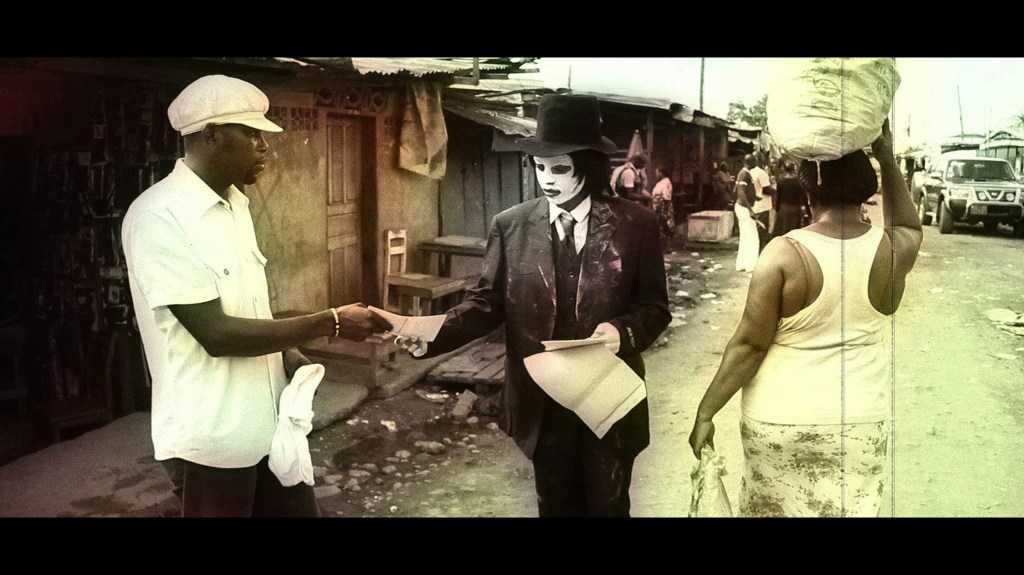
On Fait Ensemble (2010)
Video, and performance.
The video is about Mami Wata, an ancient African water spirit, who has been worshipped by Africans before the arrival of Europeans but came into recorded history in the 15th Century. It was recorded that at the sight of European ships, Africans associated water spirits with the Europeans. During colonialism, in the 1880s a famous German hunter, Breitwiser, brought back a wife from Southeast Asia to Germany. Breitwiser’s wife performed in Hamburg’s volkerschau, essentially human zoos, under the stage name “Maladamatjaute”. She charmed snakes. The Frienlaender lithographic company, in Hamburg, made a chromolithograph of the snake charmer, the original of which has never been found. However in 1955, this image was reprinted in Bombay, India, sent to them from Ghana. It is unknown how exactly the image got to West Africa, but it is thought to have been taken from Hamburg by African sailors when they were in Germany. However on its arrival in Africa, locals declared Maladamatjaute to be a resemblance to Mami Wata. The image has since proliferated throughout the African continent as Mami Wata, the snake charmer. On Fait Ensemble suggests in a metaphorical sense, that this image came from Europeans. This is done through the market performance of Papai Wata. Papai Wata, the concomitant to Mami Wata in Beninese traditional ceremonies, symbolizes the European man and is depicted in the video by a white painted face.
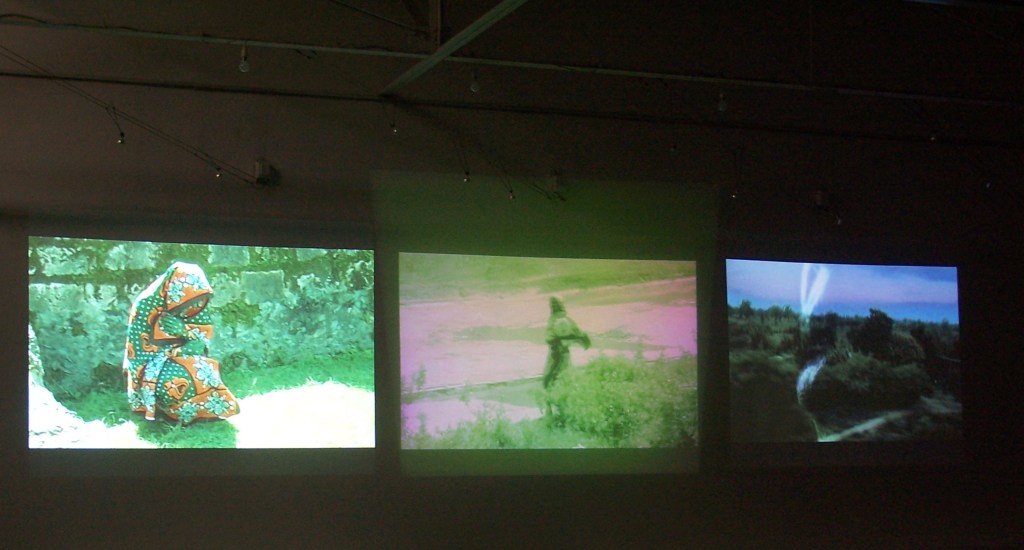
Prison Sex II (2009)
Video triptych, and performance.
Prison Sex II is a series of works that began with a community mural evolved in to a public performance and then became a video triptych. The mural was painted during Urban Wasanii 2008; a Triangle Arts Trust workshop in Mombasa, Kenya. The image was of a leso, a piece of cloth that came from the suture of handkerchiefs worn by Portuguese merchants in the 16th century. The local women on the Kenyan coast traded with the merchants and sewed the handkerchiefs into cloths they could wrap around their bodies. These cloths evolved to become the lesos that we know today in East Africa. The mural’s message was to “know your history, but own your culture.” This made reference to the history of the textile that so many people believe is indigenous to East Africa when in fact it represents a history of hybridism. The public performance of Prison Sex II was inside the Fort Jesus museum and devoted to the memory of a woman who was imprisoned there during colonial rule when the museum was a prison, as means to gain autonomy from her husband. The central video of the triptych talks about this woman as well as a female Kenyan freedom fighter named Me Kitilili. Me Kitilili was also imprisoned at the fort because she fought British colonists who wanted to cut down sacred forests on the Kenyan coastline. Editor: Chris King. Musical Score: Maia Lekow.
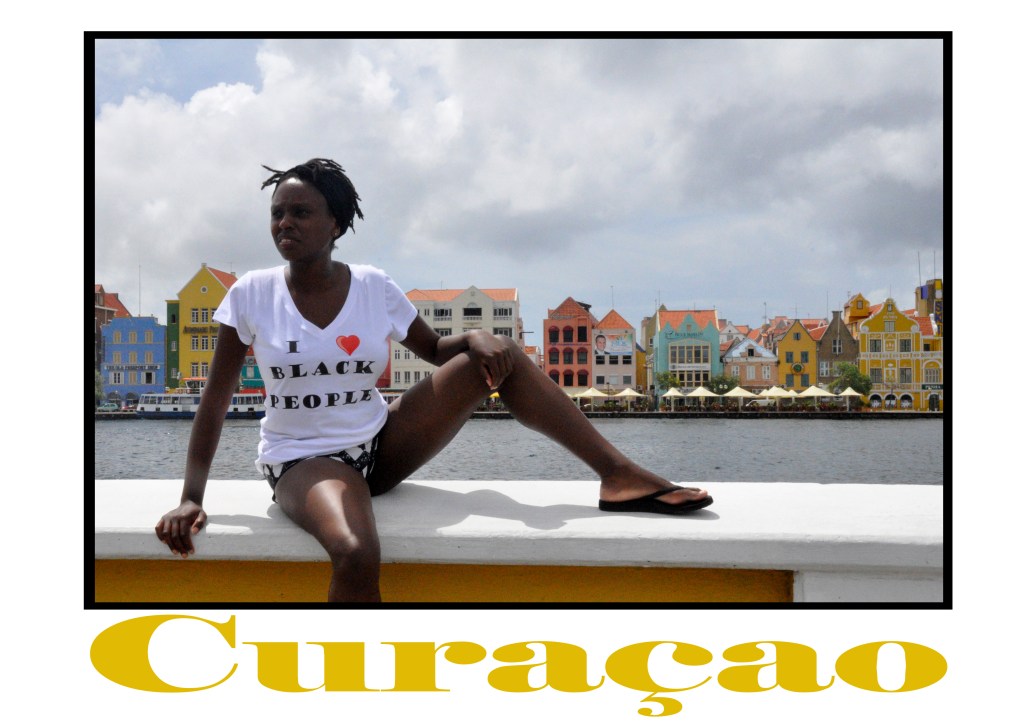
Untitled series, Curacao (2010)
Performance and postcards.
This series of postcards was made in the heightened context of what Curaçao is today. A small island in the Caribbean, a part of the Dutch Antilles, Curaçao does not have political autonomy from the Netherlands. This dependency is reflected socially on the island. The population majority are Afro-Curaçaons who were introduced to the island on Portuguese and Dutch slave ships. The psychological effects of the social hierarchies are at the very least blatant to a foreigner and at the most debilitating to the population.
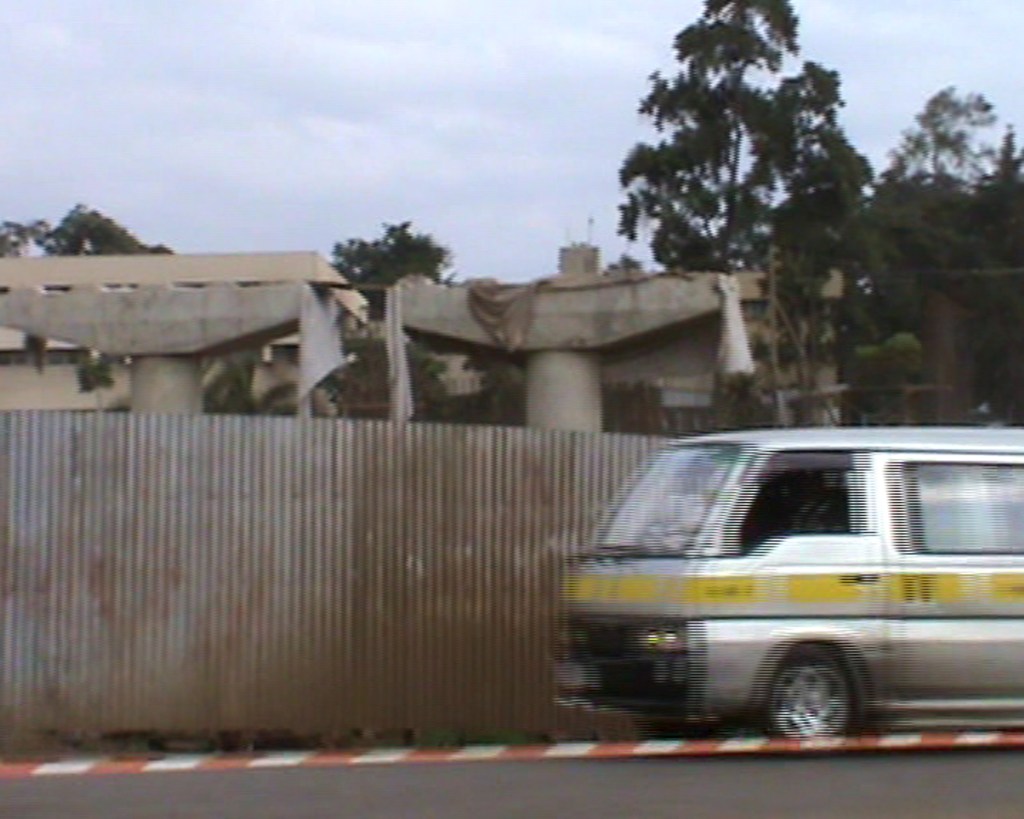
Fertile (2011)
Video, and poerty.
Nairobi, a one hundred year-old performer who calls strangers to her forests: She stretches, twists and turns as her body is caressed, pounded, pricked, sodomized and loved. She goads and gently soothes her strangers with her pristine sunshine in ‘smogged-out’ traffic. Nairobi is now fertile for the banal and for the taking. Poetry by Ngwatilo Mawiyoo.
Is Free Dumb (2010)
Public performance.
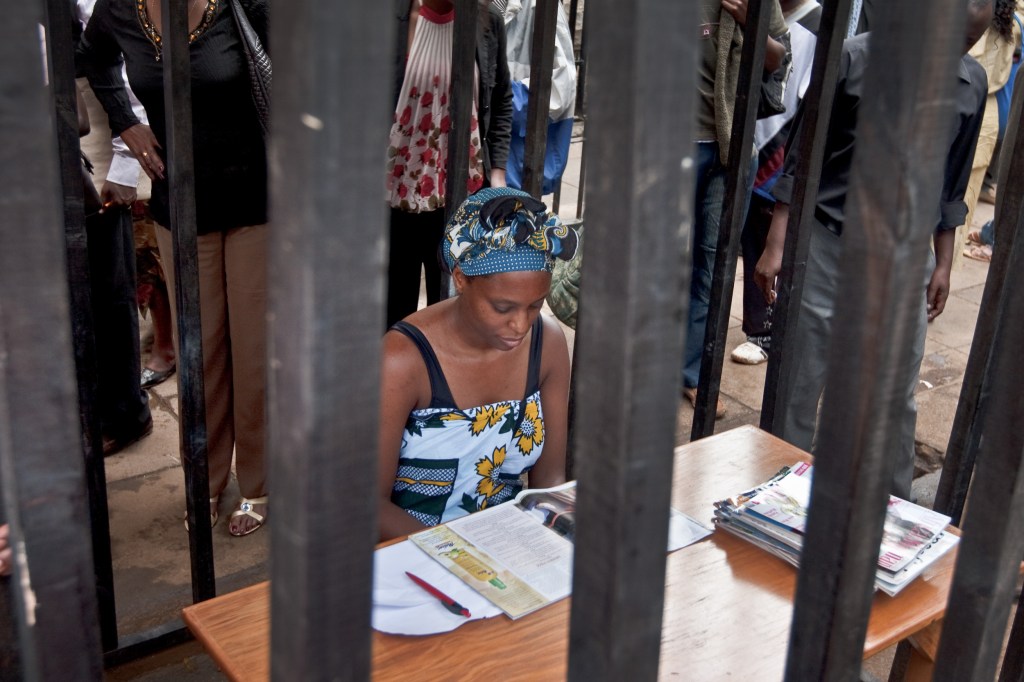
I noticed that many of my contemporaries are afraid to come home to Kenya to build a life on home soil; it is not uncommon to hear people say there is no room for growth in Kenya. I devised this public performance to know what people are frightened of and what we who are here dealing with. What is it that is preventing us from growing as a community? How important is freedom? How important is the mentality of freedom? For the reasons of their own incomprehension, the Nairobi police force arrested me whilst I was performing IS FREE DUMB. Their obstinate and deliberate incomprehension showed placidity to growth; to expansion, into freer spaces of cognition and idea-making which occurs at all levels. The performance focused on individual freedom; a freedom that allows one to express oneself throughout spaces of human cognition, spaces that can remain as private or public as one wants. The essential ingredients to such social statuses allows for an artist to do a public performance and for the audience to either contemplate it or passively disregard the artwork. And yet the simplicity of such interaction cannot be overstated.
Rebuilding, Remembering & Renewing (2010)
Performance and installation.
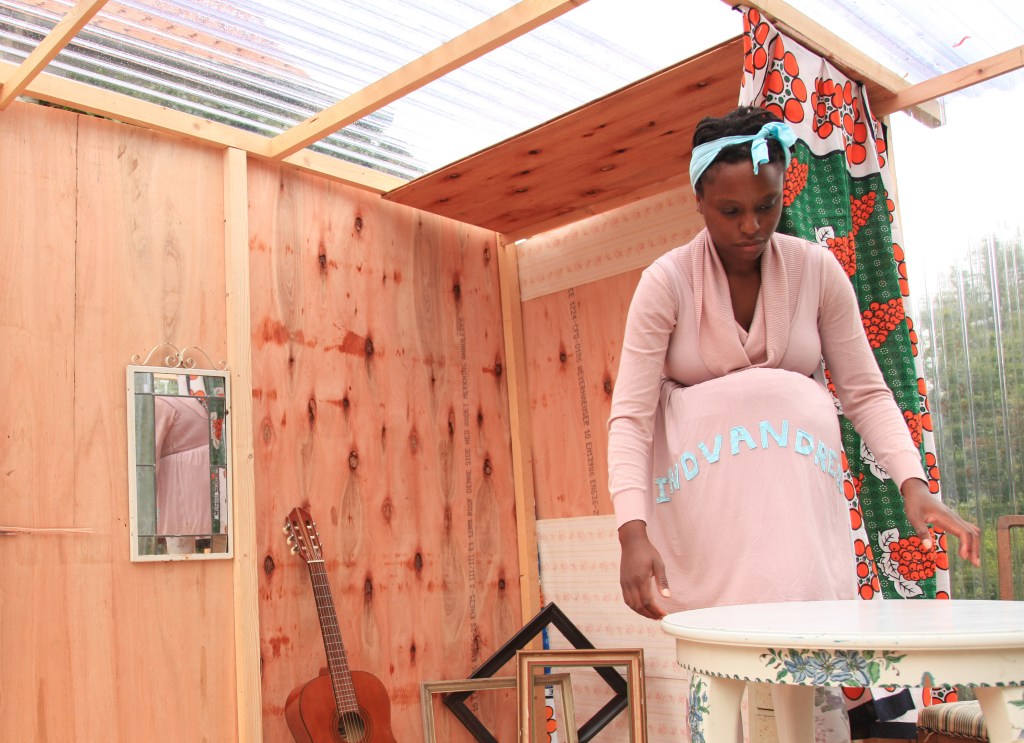
This was a collaborative project done with Gillion Grantsaan, a Surinamese-Dutch artist who has been based in Copenhagen for the last ten years. We did the project under the umbrella of a project entitled NotAboutKarenBlixen in which a group of artists from the southern and northern hemispheres set out to contribute to the void of postcolonial discourse in Denmark. Gillion and I focused on the immigrant situation in Denmark by building a writer’s ‘blues shack’ on the residential premises of the Karen Blixen Museum in Rungstedlund, Denmark.
 Ato Malinda writes…